
Most product tiers charge you more for a slightly better version of the same thing.
This one is not that. The Always Pan vs Always Pan Pro difference is a change of material, and almost every rule about how you use the pan changes with it.
The Two Pans Side by Side
| The difference in one table | Always Pan | Always Pan Pro |
|---|---|---|
| Price at 10.5 inches | $135 | $179 |
| Surface | Thermakind ceramic coating | Titanium, no coating |
| Oven safe to | 450F | 1000F |
| Metal utensils | No, wood or silicone | Yes |
| Dishwasher | No, hand wash only | Yes |
| Warranty | 3 year limited | Limited lifetime |
Four hundred and fifty degrees against a thousand. That single row changes what the pan is for.
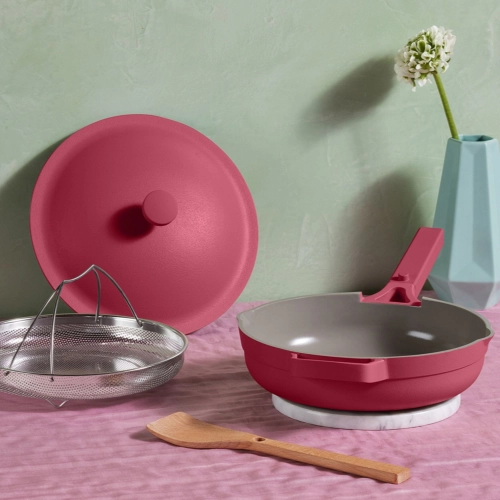
The original is $135 at 10.5 inches with a Thermakind ceramic nonstick coating, made without PFAS, PTFE, PFOA, lead or cadmium, oven safe to 450F.
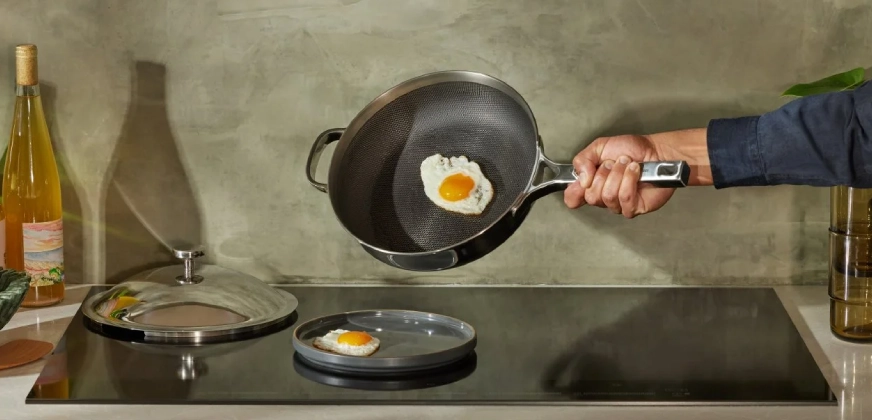
The Pro is $179 at the same size with a titanium cooking surface and no coating at all, using what the brand calls NoCo technology, in a 3mm fully clad tri-ply build with a stainless exterior and aluminium core.
That is the heart of it. One pan has a ceramic nonstick layer that will eventually wear, and the other has a textured metal surface with nothing on top of it to wear off.
The 8.5 inch size exists in both and the 12.5 inch in the original. A Gold version of the Pro has an oven safe temperature of 750F rather than 1000F, so check the finish before you choose.
What the Extra Forty Four Dollars Does
| What the extra $44 buys | Change | Multiple |
|---|---|---|
| Price increase | $44 | 32.6% more |
| Oven temperature | 450F to 1000F | 2.22 times |
| Warranty | 3 years to lifetime | Open ended |
| Cost per warranted year on the cheaper pan | $45.00 | Three years only |
| Cost per warranted year on the Pro | Falls every year | Lifetime |
Thirty two point six per cent more money for 2.22 times the oven temperature and a warranty with no end date.
This is the rare upsell where the arithmetic favours the expensive option rather than the cheap one.
The ceramic pan carries a 3 year limited warranty, so at $135 it costs $45 for each guaranteed year. The Pro carries a limited lifetime warranty, which means its cost per guaranteed year falls every year you own it.
Add the practical freedoms. Metal utensils are allowed on the Pro and banned on the ceramic. The Pro goes in the dishwasher and the ceramic must be hand washed, never fully soaked, and cooled completely before cleaning.
The oven safe temperature difference is the one that changes recipes rather than habits, because 450F rules out finishing a steak under a broiler and 1000F rules out almost nothing.
What Testing Actually Showed
| What an independent tester measured | Pro | Ceramic |
|---|---|---|
| Time to boil water | 2 min 41 sec | 2 min 48 sec |
| The gap between them | 7 seconds | 4.2% faster |
| Category average for comparison | 2 min 37 sec | – |
| Eggs with oil | Zero sticking | – |
| Eggs with no oil at all | Stuck but recoverable | – |
Seven seconds separate them on boiling water. The heat conduction upgrade is real and small.
An independent reviewer measured both and found the Pro boiled water in 2 minutes 41 seconds against 2 minutes 48 for the ceramic version, with a category average of 2:37.
So the Pro is 4.2% quicker than its sibling and still slower than the category average. Anybody buying it for speed is buying the wrong feature.
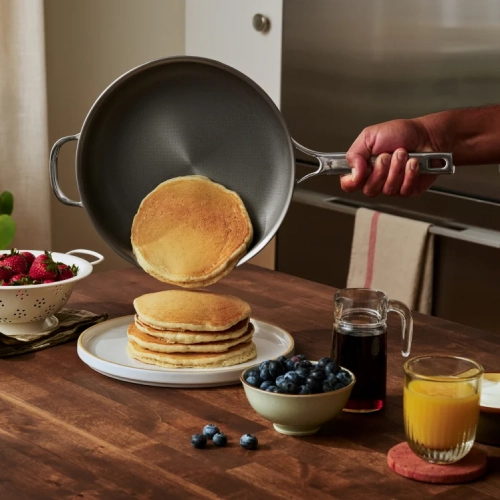
On the thing that matters more, the same tester reported zero sticking with oil, and eggs that stuck without any oil at all but came away with a rinse.
That last point is the honest limit of a coating free surface. It is nonstick in the way a well kept carbon steel pan is nonstick, which is to say it needs a little fat, rather than the way a ceramic nonstick pan is on day one.
Where the Pro Falls Down
| What the same tester disliked on the Pro | Why it matters |
|---|---|
| The lid is 0.8mm and feels fragile | It is the part most likely to go |
| Poor lid seal, steam escapes onto the handle | A burn risk in normal use |
| Squared handle described as uncomfortable | You hold it every time |
| Polished finish shows fingerprints | Cosmetic, but constant |
| Long term nonstick performance unproven | The pan is too new to know |
The complaints are about the lid and the handle rather than the cooking surface.
No article recommending the dearer option is worth reading without this section, and the criticisms are specific.
The lid is 0.8mm thick and was described as thin and fragile, the seal is poor enough that steam escapes onto the handle, and the squared handle itself was called uncomfortable.
The polished titanium shows every fingerprint, which is cosmetic and relentless.
The most important caveat is that the pan is new enough that nobody has years of data on how the surface holds up. The lifetime warranty covers performance including food sticking, which is reassuring, and a warranty is a promise rather than a track record.
Which One Should You Buy
| Buy the ceramic Always Pan if | Buy the Titanium Pro if |
|---|---|
| You cook on low to medium heat only | You sear, roast and finish in the oven |
| You never put pans in the oven | You use metal utensils by habit |
| You will hand wash without resenting it | You want it in the dishwasher |
| You want the beechwood spatula and steamer | You want the lifetime warranty |
| The $44 matters more than the warranty | You keep cookware for years |
- Cook on low heat and hate washing up by hand, buy neither and look at stainless
- Want one pan that does everything including the oven, buy the Pro
- Want the steamer basket and the beechwood spatula, that is the ceramic set
- Replace cookware every few years anyway, the ceramic is fine
- Buying a wedding present, the lifetime warranty is the one that reads better
Our view is that the Pro is the better buy for most people who cook properly. The ceramic Always Pan is still a good pan for anybody who cooks gently and accepts the care rules, and its oven safe temperature of 450F covers most weeknight food.
The deciding question is not the price, it is whether you will actually follow the ceramic nonstick care instructions for three years, because the warranty applies only if you do.
Final Verdict
| Category | Score |
|---|---|
| Value Of the Pro Upgrade | 9 / 10 |
| Oven And Utensil Flexibility | 9 / 10 |
| Warranty Difference | 9 / 10 |
| Lid Quality On the Pro | 4 / 10 |
| Proven Long Term Durability | 5 / 10 |
| Overall Score | 8 / 10 |
Eight out of ten for the Pro as an upgrade. For 32.6% more money you get 2.22 times the oven safe temperature, metal utensil use, dishwasher cleaning and a lifetime warranty instead of three years, and an independent tester found zero sticking with oil. What holds it back is a 0.8mm lid that feels fragile, a lid seal that vents steam onto the handle, a squared handle people find uncomfortable, and a surface too new for anybody to have long term data on. Anyone weighing the Always Pan vs Always Pan Pro difference should treat it as a material change rather than a tier.
FAQs
What is the main difference?
Material. The original has a ceramic nonstick coating, the Pro has a titanium surface with no coating, and every usage rule follows from that.
How much more is the Pro?
Forty four dollars at 10.5 inches, which is $179 against $135, or 32.6% more.
Can I use metal utensils?
On the Pro yes. On the ceramic Always Pan no, wood or silicone only, and metal will damage the coating.
Are they dishwasher safe?
The Pro is. The ceramic version is hand wash only and must not be fully soaked or cleaned while hot.
What are the oven limits?
450F on the ceramic Always Pan and 1000F on the Pro, though the Gold finish of the Pro is rated to 750F.
Do eggs stick to the Pro?
Not with a little oil, according to an independent test. With no oil at all they stick but clean off easily.
