
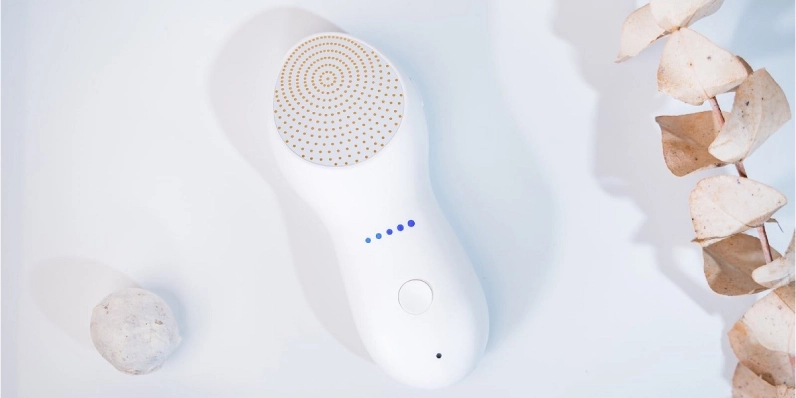
At home radiofrequency devices are one of the fastest growing corners of skincare, and also one of the hardest to judge from outside.
Nebulyft sits near the top of that market on price. This Nebulyft review takes the specification seriously, then puts two of the brand’s own numbers side by side, because together they say something the marketing does not.
What $849 Buys
| Spec | nebulyft N1 |
| Price | $849, or $938.99 bundled with gel |
| Technology | Multipolar micro RF, MEMS |
| Electrodes | 384 titanium gold on a 7.9 inch panel |
| Energy levels | Five |
| Working temperature | About 107F, or 42C |
| Session | Around 10 minutes, daily |
| Battery | 5 to 6 treatments per charge |
| Water rating | IP67 |
Eight hundred and forty nine dollars. Ten minutes a day. Charged roughly twice a week.
The specification is genuinely detailed for this category. Three hundred and eighty four titanium gold electrodes across a 7.9 inch panel, five energy levels, an app, IP67 water resistance and a working temperature held around 42C.
Ten minutes a day sounds small until you commit to it. Over a year that is more than sixty hours, and the battery runs five to six sessions per charge, so it needs charging roughly twice a week for a daily routine.
A note on the range. An older model sold for just under $500 and the nebulyft N1 now sits at $849, which is a substantial step up for a category where nobody outside the company has measured the difference.
The Finding: Two Clocks
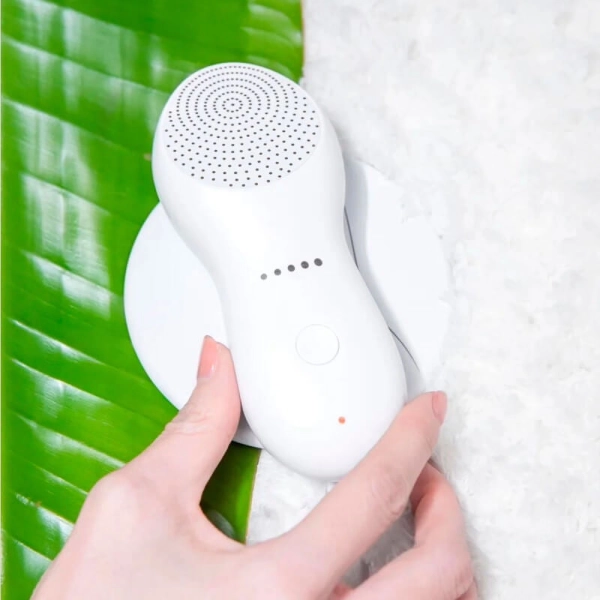
Here is the part worth pausing on, and it comes entirely from the brand’s own pages.
| The two timelines | Days | What happens |
| Money back guarantee | 14 | Your decision deadline |
| Claimed results window | 28 | When the brand says to judge |
| Gap you carry yourself | 14 | Half the trial, at your risk |
The guarantee expires at day 14. The results are promised at day 28. You decide at the halfway point.
Nebulyft markets a 28 day trial showing improvements in fine lines, pores and smoothness, which is a reasonable window for this kind of device, since collagen responses are slow and no serious brand promises overnight change.
The money back guarantee, though, runs 14 days.
So a buyer following the brand’s own instructions reaches the return deadline having completed half the programme the brand says is needed, at which point they either send back a device that has not been given its stated chance, or keep an $849 purchase on faith for another fortnight.
Fix that one number and the score in this article goes up.
What the Evidence Does and Does Not Show
| What we could verify | What we could not |
| A trial is registered on ClinicalTrials.gov | Its design, size or published results |
| 80 reviews on the product page, 90% five star | Any independent review pool |
| An older model sold for under $500 | Why the newer one costs $849 |
| One blogger reported smoother skin | She received the device free of charge |
A registered trial is a real credential. It is not the same as published results anyone can read.
There is a study for a micro RF skin device registered on ClinicalTrials.gov, which is more than most brands in this space can point to, and registering a trial at all suggests an intention to test properly rather than simply assert.
We could not load the record to check its design, its size, whether it was controlled, or whether results have been posted, so we are reporting only that it exists.
The customer evidence is thin in a different way. Eighty reviews at 90% five star sit on the brand’s own product page, which is a small pool on its own platform, and the one independent blogger review we found came from a device that was gifted with an affiliate code attached.
That blogger also did something worth repeating. She used it every three to four days rather than daily, and for one minute per area rather than two, to avoid irritation.
Safety Notes That Matter More Than the Specification
Radiofrequency devices heat tissue deliberately, and that means the cautions are real rather than legal boilerplate.
- Not for use with a pacemaker or implanted electronic device
- Caution with metal implants or fillers in the treatment area
- Ask a doctor first with diabetes, thyroid conditions or pregnancy
- Start on the lowest setting and build up slowly
- Stop if skin stays red, sore or swollen after a session
A ten minute device held against your face daily is a commitment, and the sensible way to begin is far below the maximum, on a small area, with a gap of several days, until you know how your skin responds.
Who Might Consider It
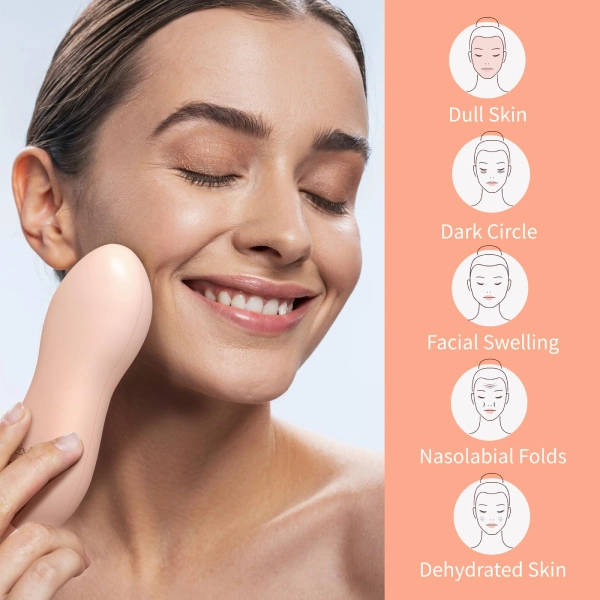
Consider it if you want an at home RF device with a detailed specification and an app, you are comfortable spending $849 on something whose evidence you cannot fully check, and you have cleared it with a professional.
Wait if you want published trial results, an independent review pool, or a guarantee that lasts at least as long as the results window. Waiting costs nothing here.
Final Verdict
| Category | Score |
| Build And Specification | 8 / 10 |
| Ease Of Use | 8 / 10 |
| Evidence Published | 4 / 10 |
| Guarantee Length | 3 / 10 |
| Price | 4 / 10 |
| Overall Score | 5.5 / 10 |
Five and a half out of ten, which is a score about evidence rather than about the hardware. The specification is strong for the category, with 384 electrodes, five energy levels, IP67 and a ten minute daily routine, and a registered clinical trial is a credit. What costs it points is $849 against an older model at under $500, a review pool of 80 on the brand’s own page, no independent testing we could find, and a 14 day money back guarantee on a product that asks for 28 days to work. Anyone reading a Nebulyft review should ask the brand for published results and a guarantee that matches its own timeline.
FAQs
How much does the Nebulyft N1 cost?
$849, or $938.99 bundled with anti-aging gel at the time of writing.
How long does a session take?
Around ten minutes, used daily according to the brand.
How long is the returns window?
Fourteen days, which is half the 28 day period the brand quotes for results.
Is it clinically proven?
A trial for a micro RF device is registered on ClinicalTrials.gov, but we could not verify its design or find published results.
Is it safe for everyone?
No. It is not for use with pacemakers or implanted devices, and several conditions need medical advice first.
How often should it be charged?
Every five to six treatments, so roughly twice a week on a daily routine.
